Prof Tulio de Oliveira among Clarivate’s 2025 Highly Cited Researchers

This remarkable accomplishment places him among an elite group of only 11 South African researchers that made the list of the top 1% in the world.
“Being named a Highly Cited Researcher is not just a personal achievement; it represents the collective effort of my team at CERI and the vibrant research community at Stellenbosch University. It highlights our commitment to pioneering research that addresses global health challenges and fosters innovation for a sustainable future,” said de Oliveira. “A testament to the impactful work we are doing at CERI, it inspires us to continue pushing the boundaries of knowledge, collaborating with other scientists, and contributing to a healthier, more resilient world for everyone.”
Clarivate’s Highly Cited Researchers programme identifies influential research scientists and social scientists who significantly shape their fields. These selected individuals contribute to expanding knowledge and driving innovation that benefits society, making the world healthier and more sustainable.
To be recognised as Highly Cited Researchers, candidates must have authored multiple papers that are among the top 1% in citations for their respective fields over the past 11 years, as indexed in the Web of Science Core Collection. The selection process also incorporates various quantitative metrics and expert judgment to refine the final list each year.
Prof Sibusiso Moyo, Deputy Vice-Chancellor: Research, Innovation and Postgraduate Studies at SU, said that “the list honours individuals whose substantial research output influences the future of science, technology, and academia worldwide, reflecting a commitment to maintaining high standards of research integrity and quality. Prof Tulio de Oliveira personifies this standard. We take immense pride not only in his continuous and remarkable contributions and achievements in both national and global contexts, but also in his considera- ble efforts in empowering and training the next generation of young scientific leaders across the continent in, amongst others, genomics, data science, public health, and health innovation. This also shows the importance of investment in our people and research and innovation infrastructure, to ensure we remain globally competitive.”
The Clarivate programme prioritises research integrity and has evolved to include sophisticated evaluation filters addressing potential issues – such as hyper-prolific authorship, excessive self-citation, and anomalous publication patterns. For example, Highly Cited Papers with over 30 authors or documented incidents of scientific misconduct are excluded from the analysis. This ongoing refinement is crucial to ensuring recognised researchers meet the programme’s standards.
The 2025 analysis reveals that this year, 7 131 awards were given to 6 868 researchers across 60 countries, yet 86.1% of the designations are concentrated in just ten countries, with over 74.6% in the top five, showing a remarkable concentration of top research talent globally. In addition, 2 400 candidates were excluded in 2025, making this a more selective list. Candidates were excluded for failing to meet these stringent criteria, underscoring the programme’s commitment to trustworthiness. The evaluation process also focuses on selecting contributors who demonstrate global impact, as indicated by citation networks. Emphasis is placed on original research over review articles to ensure that the contributions recognised are forward-thinking and influential.
“As the need for high-quality data from rigorously selected sources is becoming ever more important, we have adapted and responded to technological advances and shifts in the publishing landscape. Just as we have applied stringent standards and transparent selection criteria to identify trusted journals in the Web of Science, we continue to refine our evaluation and selection policies for our annual Highly Cited Researchers programme to address the challenges of an increasingly complex and polluted scholarly record,” said David Pendlebury, Clarivate’s Head of Research Analysis at the Institute for Scientific Information.
p>
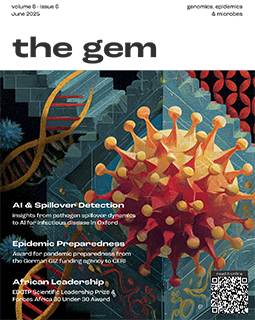
This news piece was published at the gem!

Click on the image above to read the gem, genomics, epidemics & microbes Vol 8 Issue 10, Nov/Dec 2025, or scan the qrcode.
News date: 2025-12-04
Links:
https://issuu.com/the.gem/docs/the_gem_-_genomics_epidemics_microbes_nov_dec_2025/6?fr=xKAE9_zU1NQ