Modelling the Future of HPV Prevention in South Africa - Insights from SACEMA's HPV modelling research

Using the MicroCOSM-HPV individual-based model, she evaluated policyrelevant scenarios to determine what is feasible, what is costeffective, and what could have the greatest long-term impact.
What is the main purpose of this research?
The study uses the MicroCOSMHPV individual-based model to evaluate the impact and costeffectiveness of current and
next-generation HPV vaccination strategies in South Africa. The model was developed through a multidisciplinary process drawing on gynaecological oncology, epidemiology, health economics, and software engineering to ensure that model structure aligns with real clinical pathways and the South African epidemiological context. MicroCOSM-HPV simulates the full natural history of HPV infection for 13 onco-genic HPV types, through cervical cancer, stratified by HIV status and ART use. This enables realistic assessment of how HIV modifies HPV persistence, progression and cervical cancer risk, and why certain strategies may yield greater benefit for women living with HIV.
The overarching aim is to support national policy by identifying which vaccination approaches offer the highest health impact and best value for money.
The model's credibility has been recognised internationally: MicroCOSM-HPV was one of three models used by the WHO Cervical Cancer Elimination Modelling Consortium (WHO-CCEMC) to estimate South Africa's elimination trajectory, strengthening its role for nation-al decision-making and positioning South Africa as a contributor to the global evidence base for cervical cancer elimination.
What was most rewarding, and most challenging about this research?
A particularly meaningful aspect of the work has been translating scientific outputs into actionable policy. A policy brief developed with Cancer Alliance and leading advocate Salome Meyer ensures that evidence reaches the decision-makers who influence national programmes, budgets, and procurement pathways. In November 2025, Dr van Schalkwyk presented new modelling findings at two major events in Cape Town – the International Gynecologic Cancer Society (IGCS) Global Meeting, and the WHO Eastern and Southern Africa Sub-Regional Workshop on HPV Vaccination in People Living with HIV.
These forums placed the research directly in front of programme managers, senior policy makers, funders, and technical partners at a critical time: South Africa is reviewing HPV vaccine procurement options, G20 discussions are focusing on women's health, and the country's updated cervical cancer elimination strategy is forthcoming.
While this research is generating important insights for national and regional decision makers, it also faces several scientific and practical challenges:
1. HPV genotype data among
- Women with cervical cancer is limited: South Africa has many studies on type-specific HPV prevalence across the general population and among women living with HIV, but only two studies report genotype distribution in cervical cancer. This limits precision in estimating typeattributable burden.
2. Evidence gaps around HPV vaccine performance in women living with HIV: While natural history data for women living with HIV is strong, key uncertainties remain regarding vaccine efficacy in girls with perinatally acquired HIV, loss of vaccine-induced immunity after acquiring HIV postvaccination, and translation of longterm immunogenicity data into realworld protective efficacy.
3. Variation in screening coverage and follow-up pathways, where provinces differ substantially in implementation of HPV DNA testing, availability of reflex cytology, and capacity for follow-up and treatment. These inconsistencies shape realistic modelling of the screening-to-treatment cascade.
4. A changing prophylactic vaccine landscape: Global supply is increasing and prices may fall, which affects long-term affordability and procurement strategy. These shifts introduce uncertainty into cost projections.
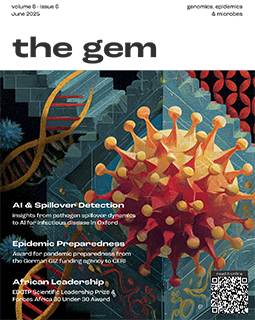
This news piece was published at the gem!

Click on the image above to read the gem, genomics, epidemics & microbes Vol 8 Issue 10, Nov/Dec 2025, or scan the qrcode.
News date: 2025-12-01
Links:
https://issuu.com/the.gem/docs/the_gem_-_genomics_epidemics_microbes_nov_dec_2025/26?fr=xKAE9_zU1NQ