From the Amazon to Africa: Genomics With Purpose
Emilyn Costa Conceição’s journey into science started in the Brazilian Amazon, where she was born and raised. “Growing up in a region deeply affected by infectious diseases, I became curious about the biology behind illness and health disparities,” she explains. “This led me to study biology at the Federal University of Pará, and later pursue a master’s in infectious diseases and a PhD in microbiology.”
Early on, Emilyn focused on the molecular aspects of tuberculosis (TB) and other micobacterioses, diseases with significant public health burdens in Brazil. Over time, her interest evolved toward genomics and its potential to transform diagnostics and surveillance. “Joining CERI felt like a natural progression, as I am part of the Genomic Surveillance to Control Pathogen Infections in Africa (GenPath Africa) project (https://www.genpath-africa.org/), led by Prof. Tulio de Oliveira, in collaboration with the TB Genomics Research Group, led by Prof. Rob Warren, where I was initially affiliated,” says Emilyn. “My position is hybrid between the two groups, but it is evolving towards a broader focus on Antimicrobial Resistance (AMR) and capacity building, expanding beyond TB and mycobacteriosis within CERI.”
Emilyn’s research at CERI focuses on applying next-generation sequencing (NGS) technologies for precision medicine and genomic surveillance of TB and other bacteria. “I’m involved in efforts to improve the diagnosis and treatment of drug-resistant TB using genomics-informed algorithms, particularly through the GenPath Africa project, Precision Action for Rifampicin-Resistant TB (PARR-TB) sub-study,” says Emilyn – who also contribute to the consolidation of surveillance networks in Brazil, with interests in BRICs countries. “This type of research is critical because it helps public health systems respond more quickly and effectively to outbreaks and drug resistance, and ensures that innovation reaches vulnerable populations.”
CERI actively fosters an inclusive environment that values diverse perspectives, including those of women in science. “As a woman from Latin America working in Africa, I have felt welcomed and respected for my contributions. CERI provides not only the infrastructure but also the mentorship and collaborative spaces needed for women to thrive, whether you're leading a research project, mentoring students, or contributing to institutional development,” says Emilyn. “Personally, I’ve had opportunities to grow both scientifically and as a leader, and I deeply value the commitment to equity and empowerment I see across the institute.”
One of the proudest moments in Emilyn’s career was being part of the establishment of a genomic surveillance network for TB in the North and Northeast regions of Brazil, areas often neglected in scientific investments. “Seeing the impact of our work on shaping local health policy, training researchers or public health personnel, and empowering regional labs, was incredibly fulfilling,” she explains, adding that it reminded her that science is not only about discovery, but also about building bridges and ensuring that innovation serves everyone – especially the most vulnerable.
On a professional and personal level, Emilyn has developed a mentorship program called IGNITE, which stands for Inspiring Girls through Networking, Innovation, and Technical Excellence. The idea was finally launched this year and is now gaining momentum. IGNITE is a supportive, mid-term mentorship program designed to empower the next generation of women in science. Click here for more info!
When asked what she would say to young girls and women who are curious about science, but not sure if there’s a place for them in this field, Emilyn’s advice is simple; “Your curiosity is valid, and there is a place for you in science.” She encourages young women to not be afraid to ask questions, and to seek mentors. “Take up space in rooms where you might be the only one who looks like you. Science needs diverse voices, it thrives on them. Your background, your story, and your unique perspective are not barriers; they are strengths. Be bold, stay true to your purpose, and know that communities like CERI exist to support and uplift the next generation of scientists.”
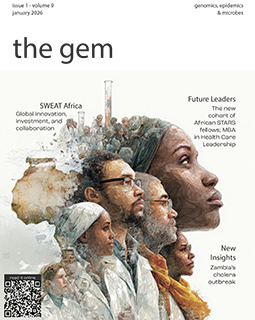
This news piece was published at the gem!

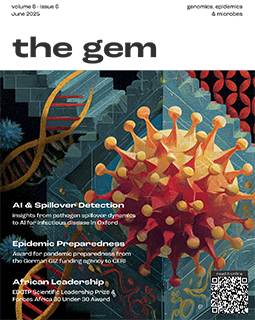
Click on the image above to read the gem, genomics, epidemics & microbes Vol 8 Issue 6, July 2025, or scan the qrcode.
News date: 2025-08-08
Links: