Building the Skills Behind Outbreak Response:
What does it take to turn genomic data into real-world public health action? For those teaching at VEME, the answer lies in more than just tools and techniques – it is about building the skills, confidence, and networks that allow scientists to apply genomics where it matters most.
For Gerald Mboowa, a Senior Data Engineer at the Broad Institute of MIT (Massachusetts Institute of Technology) and Harvard, that combination of depth, intensity and real-world relevance is exactly what gives VEME its lasting value. With a background in genomics, epidemiology, and public health, his work focuses on using genomic and bioinformatics approaches to better understand infectious diseases – with a particular emphasis on antimicrobial resistance and pathogen transmission in low-resource settings. Over the years, Gerald has led and contributed to projects involving whole-genome sequencing of bacterial pathogens, the development of bioinformatics pipelines, and the implementation of genomic surveillance systems across Africa. He is also deeply committed to capacity building, mentoring students, and supporting the growth of bioinformatics expertise and infrastructure across the continent.
Gerald first became involved with VEME in 2024, when he participated in the workshop in Brasília, Brazil. What drew him to the programme was its reputation as “a highly intensive, hands-on training platform that brings together leading global experts in bioinformatics, viral genomics, and molecular epidemiology.” He was especially interested in its “unique blend of theoretical lectures, practical sessions, and real-world applications,” and its strong focus on linking genomic data to public health decision-making.
At VEME 2024, Gerald contributed to the Next-Generation Sequencing (NGS) Analysis module, delivering hands-on training in genomic data analysis using platforms such as Terra and command-line workflows. His sessions focused on practical skills including reference alignment, SNP and variant calling, de novo assembly, and metagenomic analysis. In other words, participants were not simply introduced to sequencing data – they were taught how to work with it, analyse it, and interpret what it means.
That matters because, as Gerald points out, next-generation sequencing is now central to infectious disease research and public health. “The ability to analyse large-scale genomic datasets such as viral genomes and metagenomic data is critical for tracking pathogen evolution, identifying transmission patterns, and detecting emerging threats,” he explains. Yet access to sequencing technology alone is not enough. “While sequencing technologies are now widely accessible, there remains a significant gap in computational skills and reproducible bioinformatics workflows, especially in low-resource settings.” Training in NGS analysis helps bridge that gap by enabling scientists to turn raw sequencing data into “actionable insights for genomic surveillance, outbreak response, and evidence-based decision-making.”
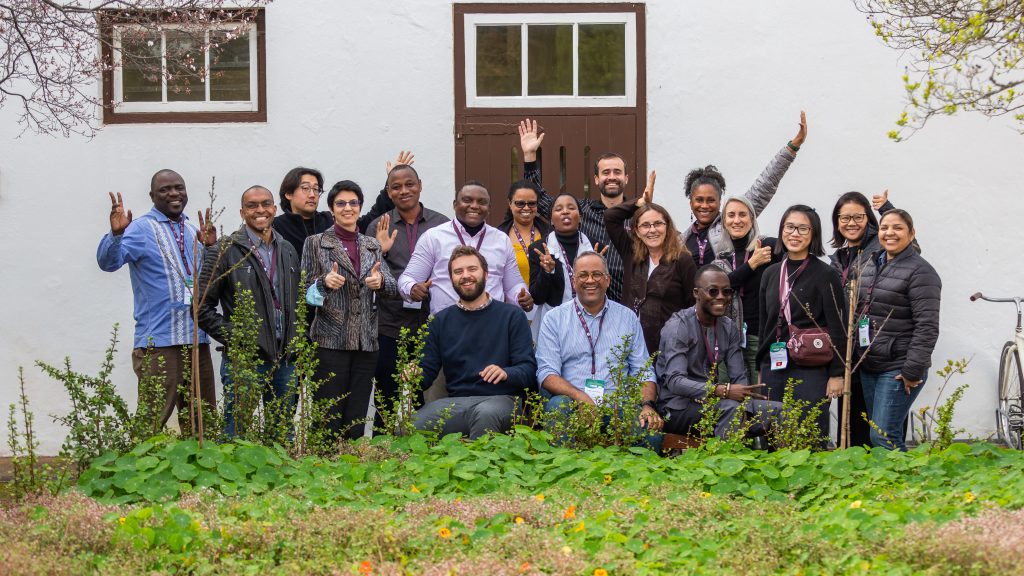
From a lecturer’s perspective, one of the most valuable aspects of VEME is the learning environment it creates. Gerald describes it as “highly interactive and collaborative,” with participants from different regions and backgrounds creating a space where “knowledge exchange goes beyond the classroom.” He was particularly impressed by how quickly participants translated theory into practice during the hands-on sessions. “Their enthusiasm, curiosity, and willingness to engage deeply with complex bioinformatics concepts made the teaching experience especially rewarding,” he notes.
Beyond the formal sessions, participants were “actively sharing ideas, troubleshooting together, and building connections that extend beyond the workshop.” For Gerald, this strong sense of community is a key reason VEME has lasting value. It not only builds technical skills, but also creates long-term scientific networks and partnerships.
That longer-term impact is something he has seen clearly. “Many participants leave VEME with practical, hands-on skills they can apply immediately in their home institutions, strengthening genomic surveillance, research, and outbreak response – particularly in low- and middle-income settings,” says Gerald. They also continue engaging with one another and with faculty, leading to joint research projects, mentorship, and ongoing knowledge exchange. As Gerald puts it, “This kind of global scientific community is essential for addressing cross-border public health challenges.”
From his perspective, this is also what makes VEME such a unique and enduring programme after nearly three decades. “It has remained relevant by evolving with the science, incorporating emerging areas such as next-generation sequencing, phylogenetics and genomic epidemiology, while keeping a strong focus on immersive, practical training,” he explains. Participants learn directly from leading experts and work on real-world datasets, making the experience both rigorous and immediately useful. “At the same time, VEME has built a global, multidisciplinary community of scientists, clinicians, and public health professionals, and that network is critical for tackling complex health challenges that do not stop at borders.”
Ultimately, Gerald sees VEME’s impact as much bigger than a single week of teaching. “VEME’s impact lies not just in the skills it teaches, but in its role in shaping a global ecosystem of researchers equipped to respond to emerging infectious diseases,” he says. “That is what explains both its longevity and its continued relevance.”
Text: Katrine Anker-Nilssen
News date: 2026-04-09
Links: