How Oropouche virus spread across Brazil and why millions may now be at risk
A fever long confined to the Amazon has spread across Brazil. Scientists now understand how.
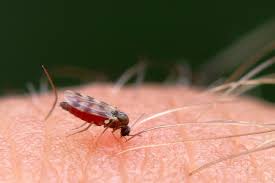
For decades, Oropouche virus has caused outbreaks in the Amazon region. Spread by a tiny biting midge rather than a mosquito, it was largely restricted to communities within the Amazon Basin. In 2024, it expanded beyond that boundary for the first time at this scale.
More than 8,000 people were confirmed infected in Brazil. The virus reached states including Bahia, Rio de Janeiro, and Santa Catarina, where it had not been reported or had only been detected rarely before. Across the Americas, 10,275 confirmed cases were recorded across nine countries. Brazil also reported severe complications including deaths, maternal and foetal impacts, and cases of microcephaly – a condition where babies are born with abnormally small heads. There is no licensed vaccine and no specific antiviral treatment.
A study published 48 hours ago in the journal Nature Ecology and Evolution explains, at national scale, how and why this expansion happened.
What revealed the drivers of the outbreak
Researchers from South Africa, Brazil, Belgium, the USA, the UK, Portugal, and Australia combined two approaches that had never before been used together at this scale for Oropouche virus.
The first used viral genomes like a molecular travel log, reconstructing where the virus moved across Brazil and how fast. The second built an environmental risk map, identifying which areas of the country have conditions most favourable for the virus to circulate and infect people.
"It linked where transmission actually occurred with where it was ecologically possible, revealing both realised and potential risk landscapes. Together, they exposed not just current transmission pathways, but also environmentally suitable areas that remain uninfected yet vulnerable to future emergence,” said Prof Houriiyah Tegally, Head of the Data Science Unit at the Centre for Epidemic Response and Innovation (CERI), at Stellenbosch University.
She added, “One key discovery only possible by integrating both approaches was finding that Oropouche ticked along in moderately suitable areas until it hit an ecological and demographic sweet spot, triggering explosive spread outside the Amazon."
How the virus spread
The expansion unfolded in two stages. In mid-2023, the virus amplified in areas around Manaus, in the Amazon state, where a combination of warm temperatures, forest cover, and human population density created favourable conditions for transmission. Ecological suitability in these areas peaked during this period.
From 2024, the virus spread far beyond the Amazon, reaching areas more than 3,000 kilometres from its epidemic origin. The speed and pattern of this spread, as seen in the genetic data, are consistent with human-mediated dispersal, although the study does not confirm the specific mechanism.
The environmental conditions most strongly associated with the spread were banana and cocoa plantations, where the midge that carries the virus breeds in decaying plant debris; temperatures of around 25 to 27 degrees Celsius; and higher human population density and urbanisation.
“Our analyses of viral genetic data reveal an expansion process with both short- and long-distance dispersal events, with some diffusion velocities in line with air traffic-mediated jumps,” said Professor Simon Dellicour, Spatial Epidemiology Lab, Université Libre de Bruxelles.
Where the risk is highest
The environmental risk map identifies high ecological suitability for Oropouche virus transmission along much of Brazil's coast, where approximately 111 million people – around 54.8% of the country's population – live.
The map also reveals surveillance blind spots. Northeastern and central-west Brazil show high predicted suitability but have sparse active monitoring for the virus. Transmission in these areas could go undetected.
"High ecological suitability without adequate surveillance means the virus can circulate undetected, delaying response and allowing transmission to establish before interventions are implemented. In practice, this creates hidden hotspots where outbreaks may only become visible once they are already widespread and harder to control", said Dr Marta Giovanetti, from the Oswaldo Cruz Foundation in Rio de Janeiro, and Università Campus Bio-Medico di Roma.
What’s next?
Researchers are already tracking where the virus may spread next. Dr Jenicca Poongavanan, a co-author of the study, points to new evidence of northward expansion.
"Our upcoming environmental suitability work predicts northward spread, with transmission risk areas identified in southeastern Mexico, and we have already seen this play out with the virus reaching Haiti and Cuba. We also need to watch closely for experimental vector competence studies investigating whether mosquitoes can transmit Oropouche virus. If they can, this dramatically expands the potential range into regions like the southern United States, where these species are abundant," said Dr Jenicca Poongavanan, from the Centre for Epidemic Response and Innovation (CERI) at Stellenbosch University.
The study calls for vector control around banana and cocoa plantations near urban areas, where conditions for midge breeding are most favourable. It recommends expanding active surveillance into high-suitability regions that currently lack monitoring. It also notes that Oropouche fever resembles dengue clinically and is likely being missed in diagnostic settings, meaning confirmed case counts may underestimate the true burden.
The analytical framework developed in this study – combining genomic surveillance with ecological risk mapping – can also be applied to other arboviruses including dengue, Zika, and yellow fever.
Publication
DOI: 10.1038/s41559-026-03042-0.
URL: https://www.nature.com/articles/s41559-026-03042-0
News date: 2026-04-19
Links: